
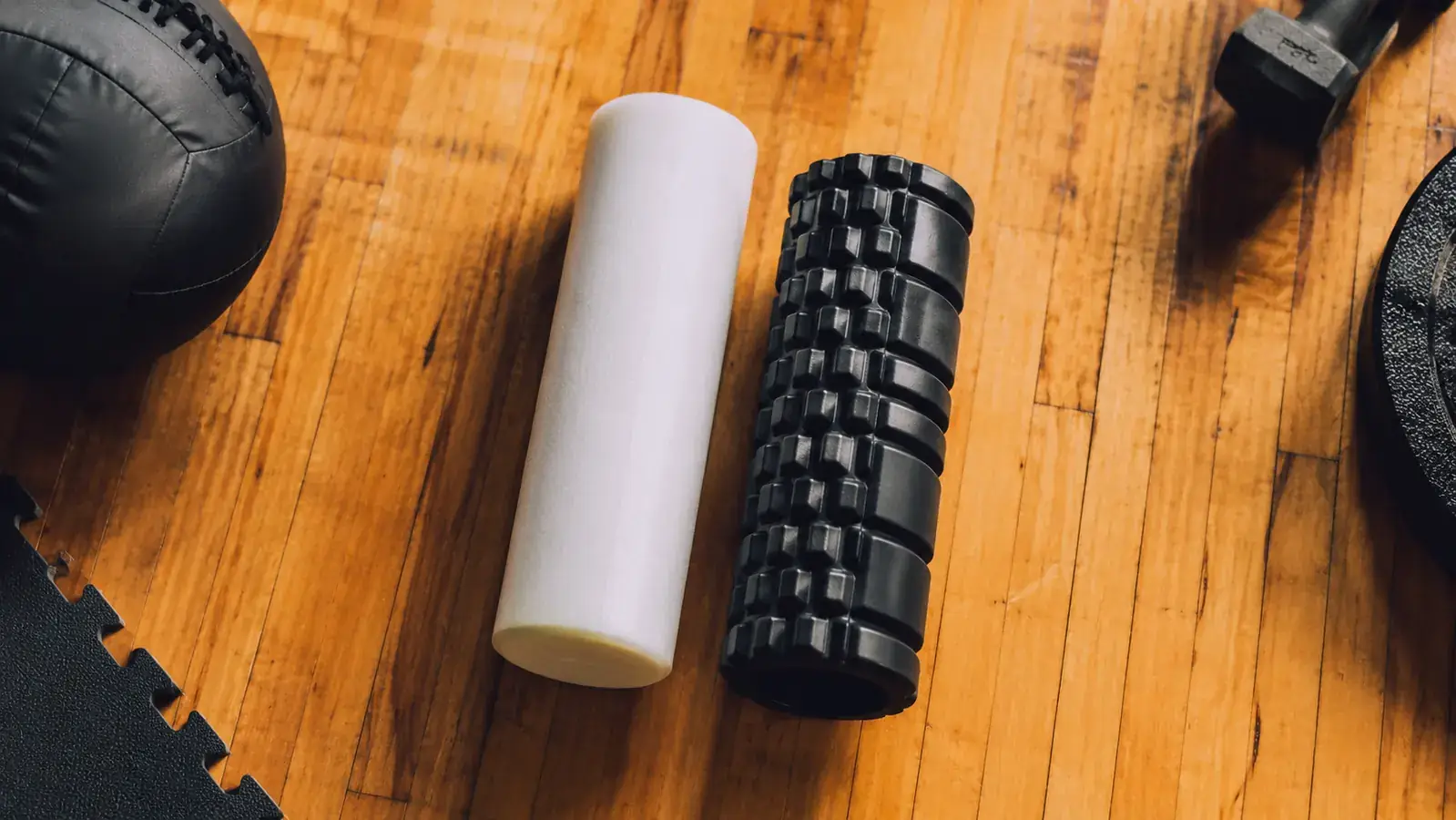
If you've spent any time looking for a foam roller, you've probably landed on two names that keep coming up in the same conversations: the TriggerPoint CORE and the RumbleRoller. They're both well-built, both recommended by coaches and physical therapists, and both cost more than the cheap pool noodle at the back of every gym. The question is whether they do the same job, and the answer is no. They don't. They're built on completely different philosophies about what foam rolling should feel like, and buying the wrong one wastes your money.
I've put both through regular use over the past several months, working them into post-training sessions after leg days, long runs, and heavy pulling workouts. Here's what the actual difference looks like in practice and who each roller is built for.
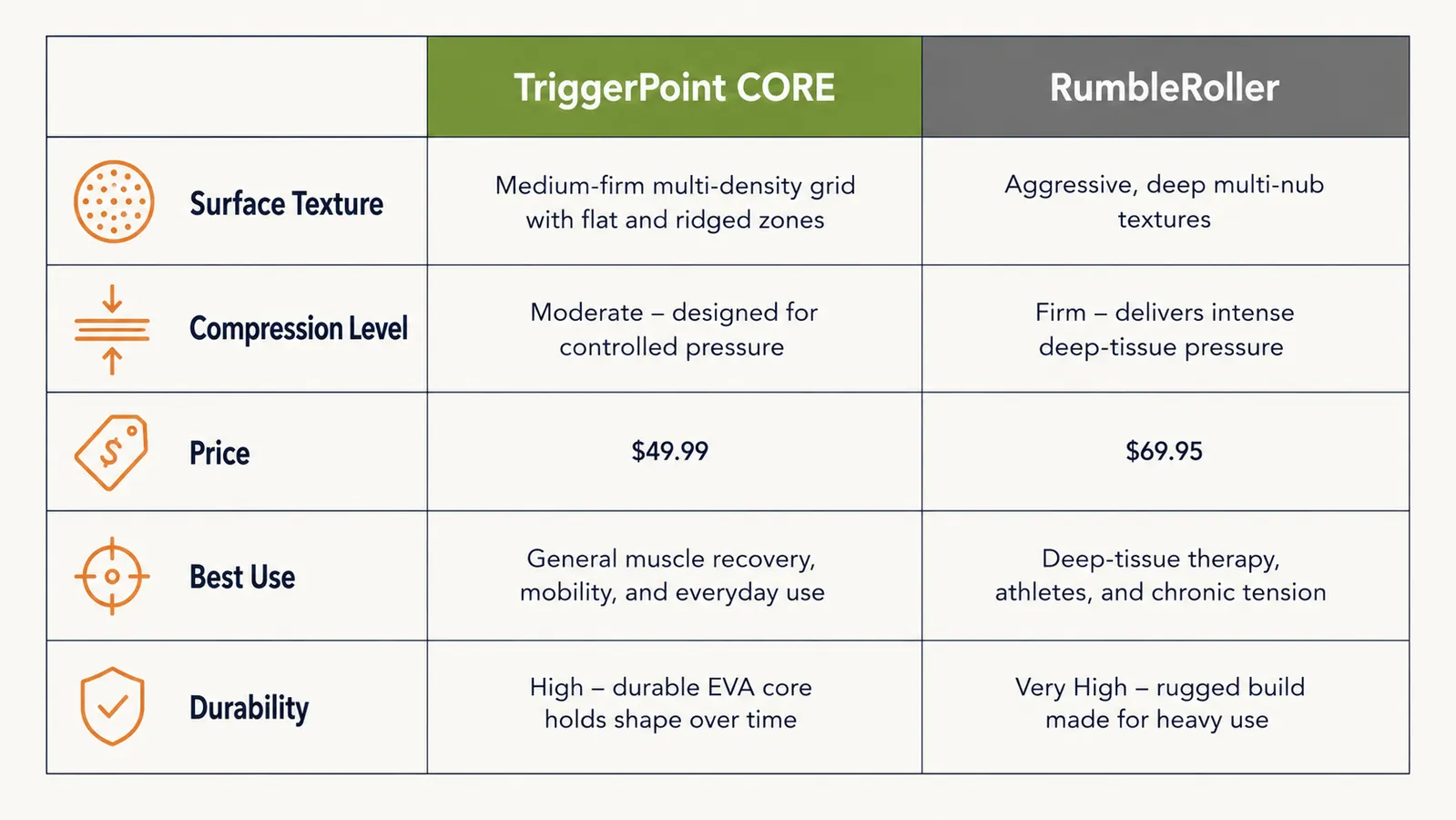
| TriggerPoint CORE | RumbleRoller | |
|---|---|---|
| Surface Texture | Smooth EVA foam, uniform compression | Raised thermoplastic bumps in a grid pattern |
| Compression Level | Softer, forgiving pressure across the full surface | Aggressive, concentrated pressure at each bump |
| Price (current) | Check today's price on Amazon | Mid-range to higher-end depending on size and firmness |
| Available Sizes | 13 inches (standard single size) | 12 inches and 22 inches, two firmness levels |
| Best Use Case | Everyday rolling, beginners, post-injury maintenance, sensitive spots | Deep tissue work, experienced rollers, dense muscle groups |
| Learning Curve | Low. Intuitive to use from day one | High. The bumps require body positioning to avoid bruising |
| Durability | Hollow core construction holds shape well over time | Bumps can flatten with heavy use over 12-18 months |
| Portability | Lightweight, fits in most gym bags | Heavier, bulkier depending on size chosen |
| Amazon Rating | 4.6 stars / 7,995+ reviews | Not available via Amazon Associates |
Where the TriggerPoint CORE Wins
The CORE wins on approachability and consistent daily use. The smooth EVA surface delivers even compression across the contact area instead of concentrating it into raised points. For most people rolling after a hard training session, that's actually the right call. You're not trying to bruise yourself into recovery. You're flushing muscle tension, improving circulation, and working through tight fascial tissue in a way your body can actually tolerate. The CORE lets you spend a real 10-15 minutes on your quads, hamstrings, and upper back without wanting to quit after 30 seconds.
The price difference also matters more than it looks on paper. The CORE comes in at roughly half the cost of a comparable RumbleRoller, and it holds up well. The hollow-core construction is stiffer than you'd expect from a softer roller, and it doesn't compress or deform the way cheap EVA foam does after a few months of regular use. For someone who wants a reliable daily driver without the aggressive bite, the CORE is the better value by a clear margin. If you want more context on long-term durability, the full 3-month TriggerPoint CORE review gets into how it held up across dozens of sessions.
Where the RumbleRoller Wins
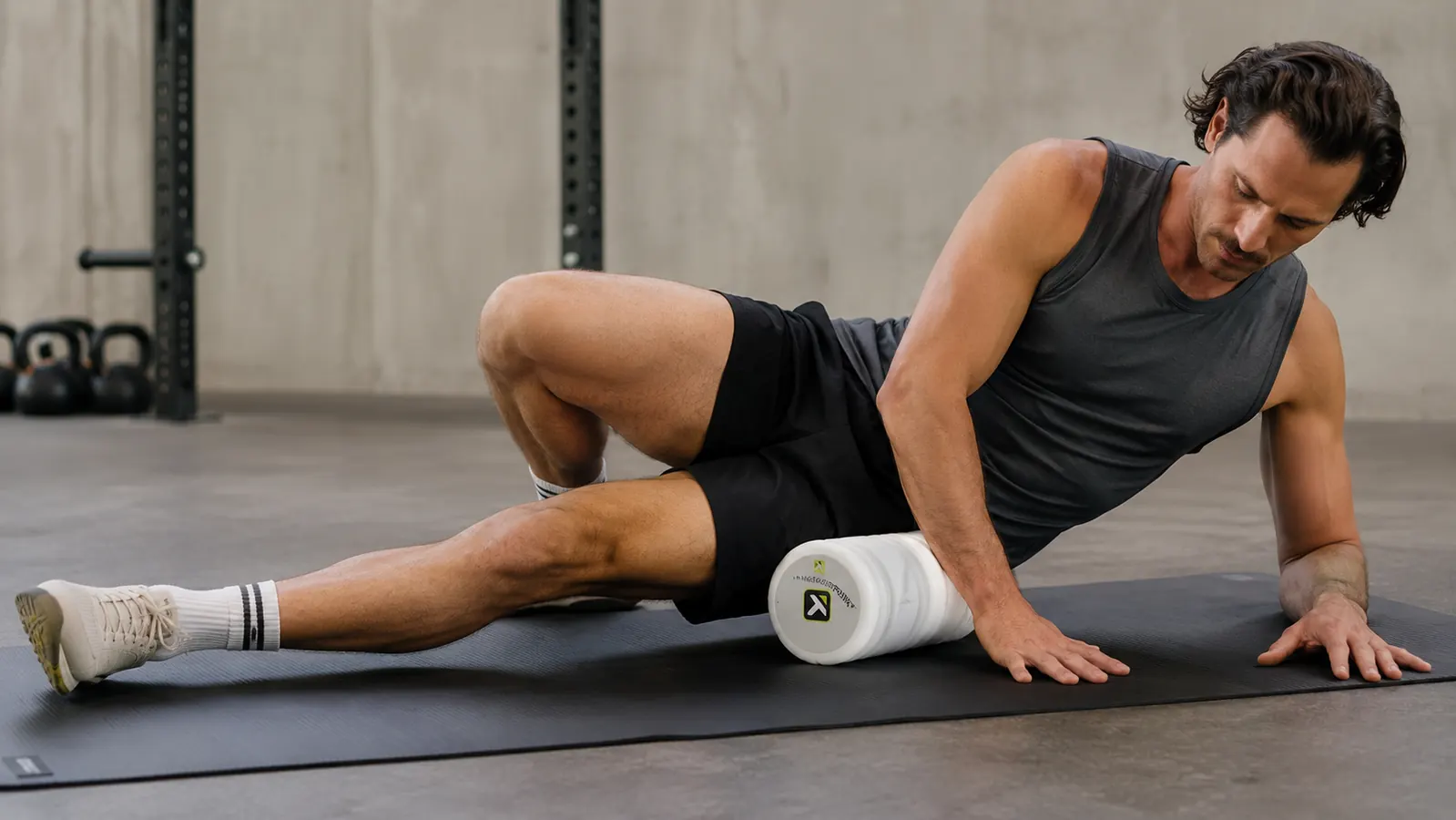
The RumbleRoller earns its reputation in one specific category: breaking into dense, heavily layered muscle groups that a smooth roller just can't reach. The thermoplastic bumps are designed to work between muscle fibers the same way a therapist's thumbs dig into a knotted glute or a bound-up thoracic spine. For lifters who have been rolling for years, whose muscles are conditioned to handle real pressure, the RumbleRoller can get into places the CORE simply slides over.
It also comes in two firmness levels and two lengths, which gives you options the CORE doesn't offer. If you want a longer roller to work your full thoracic spine in one pass, the 22-inch RumbleRoller covers more ground. For athletes who've built a deliberate rolling practice and want a tool that scales with them, the RumbleRoller's depth of stimulation is legitimate. The trade-off is that it's unforgiving, it takes weeks to learn to use without causing more soreness, and it's significantly more expensive.
The CORE costs half as much and you'll actually use it every day
The TriggerPoint CORE has over 7,900 reviews and a 4.6-star average. Affordably priced, it's the most-used foam roller in our rotation. Click to check today's price.
Amazon Check Today's Price on Amazon →The Texture Difference Is the Whole Argument
Most people who buy a RumbleRoller over a smooth roller do it because they've heard that bumps mean better results. That's not entirely wrong, but it's not the full picture. The bumps create concentrated pressure that mimics targeted soft tissue work, but only if your muscles are loose enough and conditioned enough to accept that kind of input. When you're already sore from a heavy training session, rolling onto raised thermoplastic knobs can create a guarding response. Your body tenses up instead of releasing. You end up getting less benefit, not more.
The CORE's smooth surface lets you modulate pressure through body weight and positioning instead of relying on the tool itself to generate intensity. You can go light on a sore quad and heavy on a calloused upper back just by shifting how much of your body you load into the roller. That kind of control is harder to replicate on the RumbleRoller without a lot of practice. For most training scenarios, especially post-lifting cooldowns and next-day soreness work, the CORE's moderate compression lands right where you need it.
Durability: What to Expect From Each
Both rollers are better built than budget foam options. The CORE uses a hollow-core rigid plastic tube wrapped in EVA foam, which means it won't flatten under body weight the way a solid foam roller does. The EVA layer shows minor wear over time but holds its firmness reliably. For daily use, it's a solid investment at the price point.
The RumbleRoller's weak point is its bumps. Under sustained heavy use, particularly from large athletes, the thermoplastic knobs can soften and lose some of their initial bite over a 12 to 18 month window. You're still getting a functional roller, but the depth of stimulation you paid for starts to fade. It's not a dealbreaker for most people, but it means the CORE's durability-to-price ratio is actually quite strong when you factor in replacement cycles.
The RumbleRoller's bumps are built for dense muscle groups and experienced rollers. If you're still figuring out your rolling routine, start with the CORE and build from there.
Who Should Buy the TriggerPoint CORE
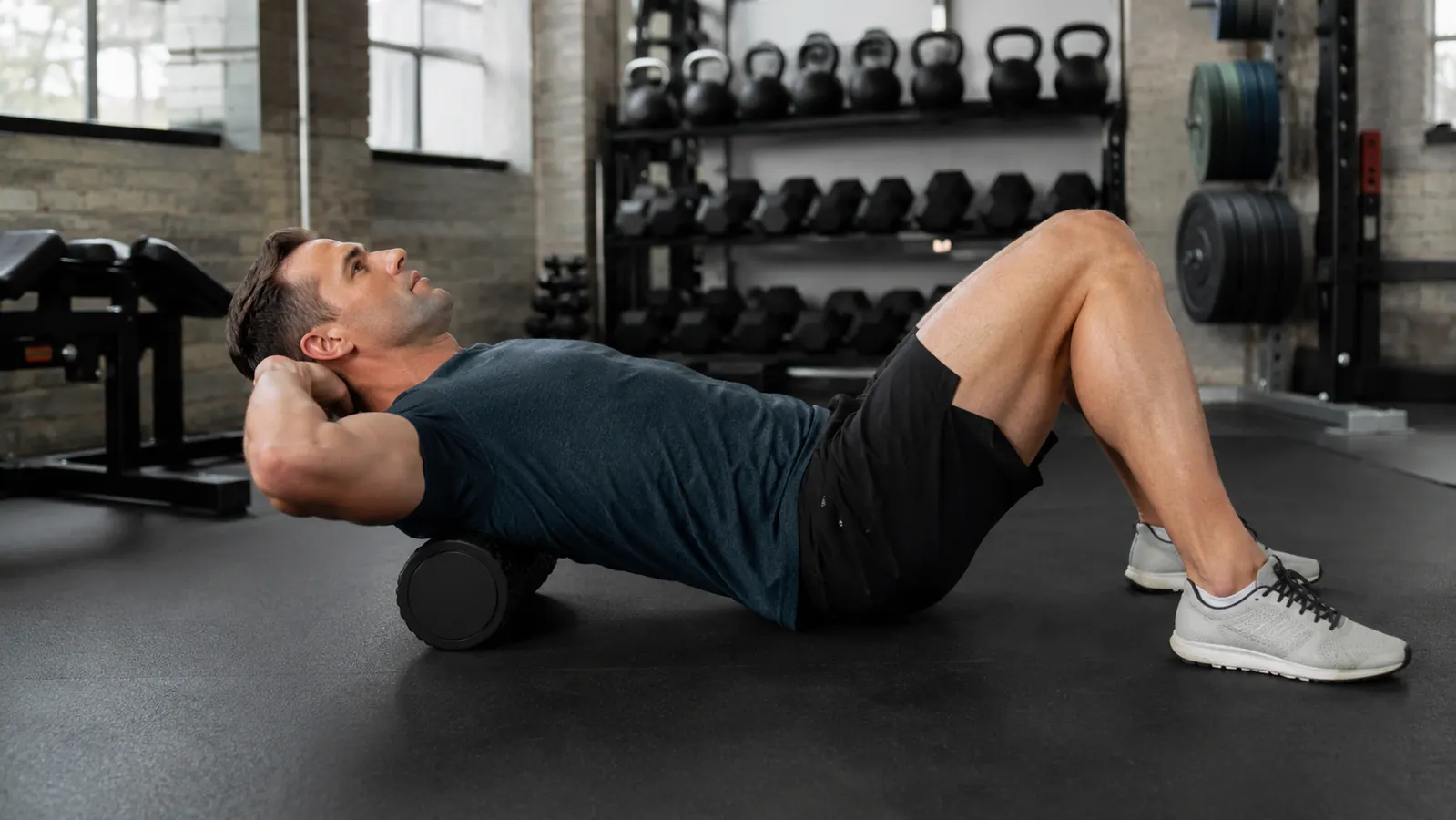
The TriggerPoint CORE is the right call for anyone who trains consistently and wants a foam roller they'll actually use after every session. That includes people new to foam rolling who haven't built a pressure tolerance yet, anyone coming back from a soft tissue injury who needs controlled compression without aggressive stimulation, and regular gym-goers who just want a reliable tool for quad, hamstring, IT band, and upper back work. Affordably priced, it's one of the better-priced pieces of recovery equipment you can add to your routine. You can see the breakdown of exactly how it performs across specific muscle groups in the 10 reasons foam rolling works guide.
It's also a good pick if you travel with your gear. The 13-inch size fits in most gym bags and large suitcases. It doesn't need batteries, doesn't require a charger, and it works anywhere you've got a few feet of floor space. Low friction, high utility.
Who Should Buy the RumbleRoller
The RumbleRoller earns its place for athletes who have been rolling consistently for a year or more and feel like a standard roller just skims the surface. If you're a high-volume strength athlete, a competitive cyclist, or a long-distance runner with thick, well-developed quads and hamstrings, the concentrated pressure from the bumps can reach adhesions that a smooth roller won't budge. It's also worth considering if you're working with a coach or physical therapist who specifically recommends a grid-style roller for your tissue type. Go in knowing the learning curve is real and the price premium is significant.
For most people, the CORE is the smarter buy at half the price
The TriggerPoint CORE delivers dependable soft-tissue compression for everyday recovery work. 4.6 stars across nearly 8,000 Amazon reviews. Check the current price before you decide.
Amazon Check Today's Price on Amazon →