
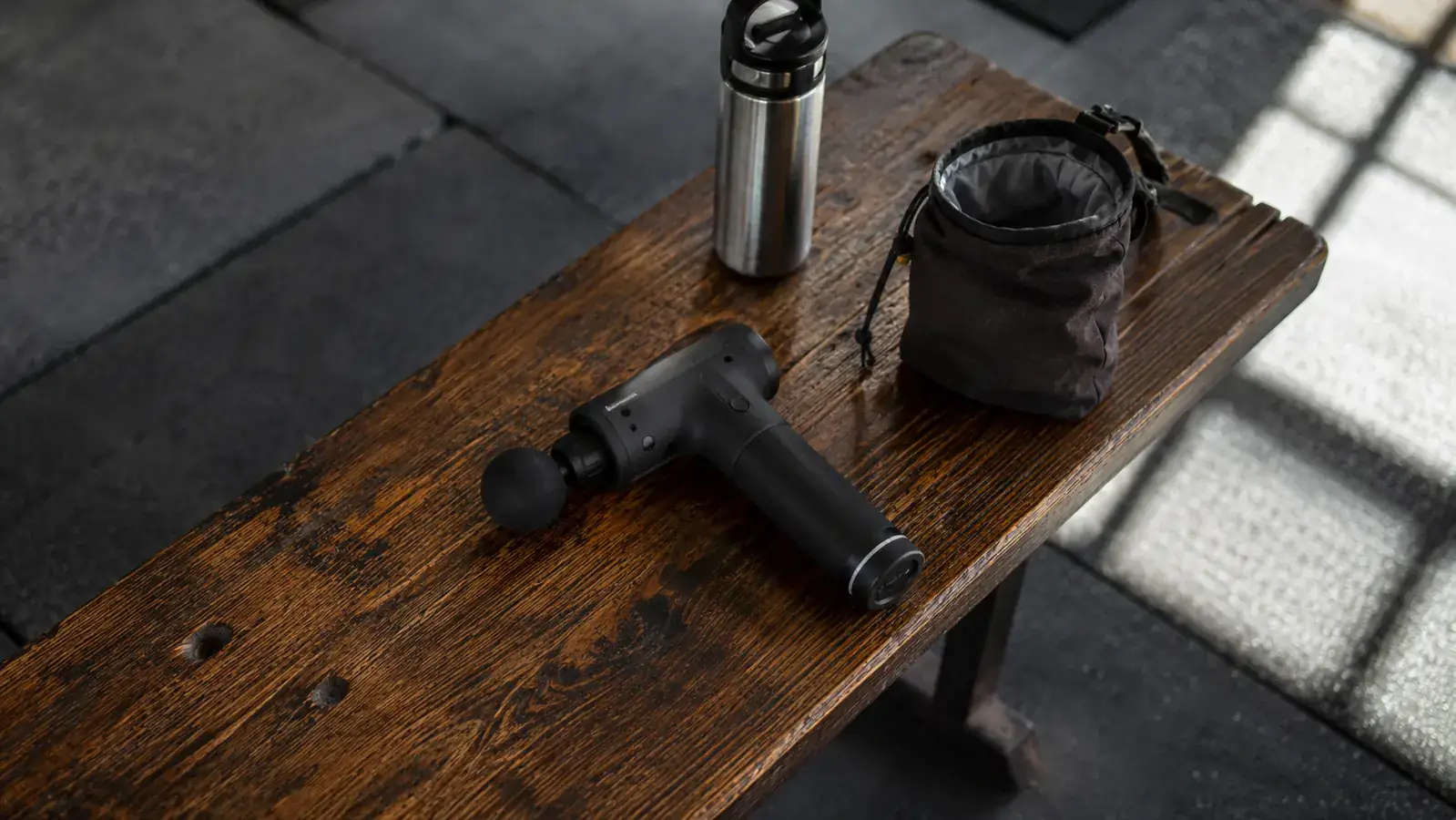
Most massage gun reviews are written by people who have owned the product for two weeks. They are enthusiastic, they list the specs, and they compare it to whatever was in their Amazon search results. I get it. Two weeks in, the novelty is still doing most of the work. I want to give you something different: a look at the BOB AND BRAD C2 percussion massager from the angle of someone who has read through hundreds of verified buyer reviews, who knows which complaints are real and which are user error, and who can tell you what the 4.6-star average is hiding before you put it in your cart.
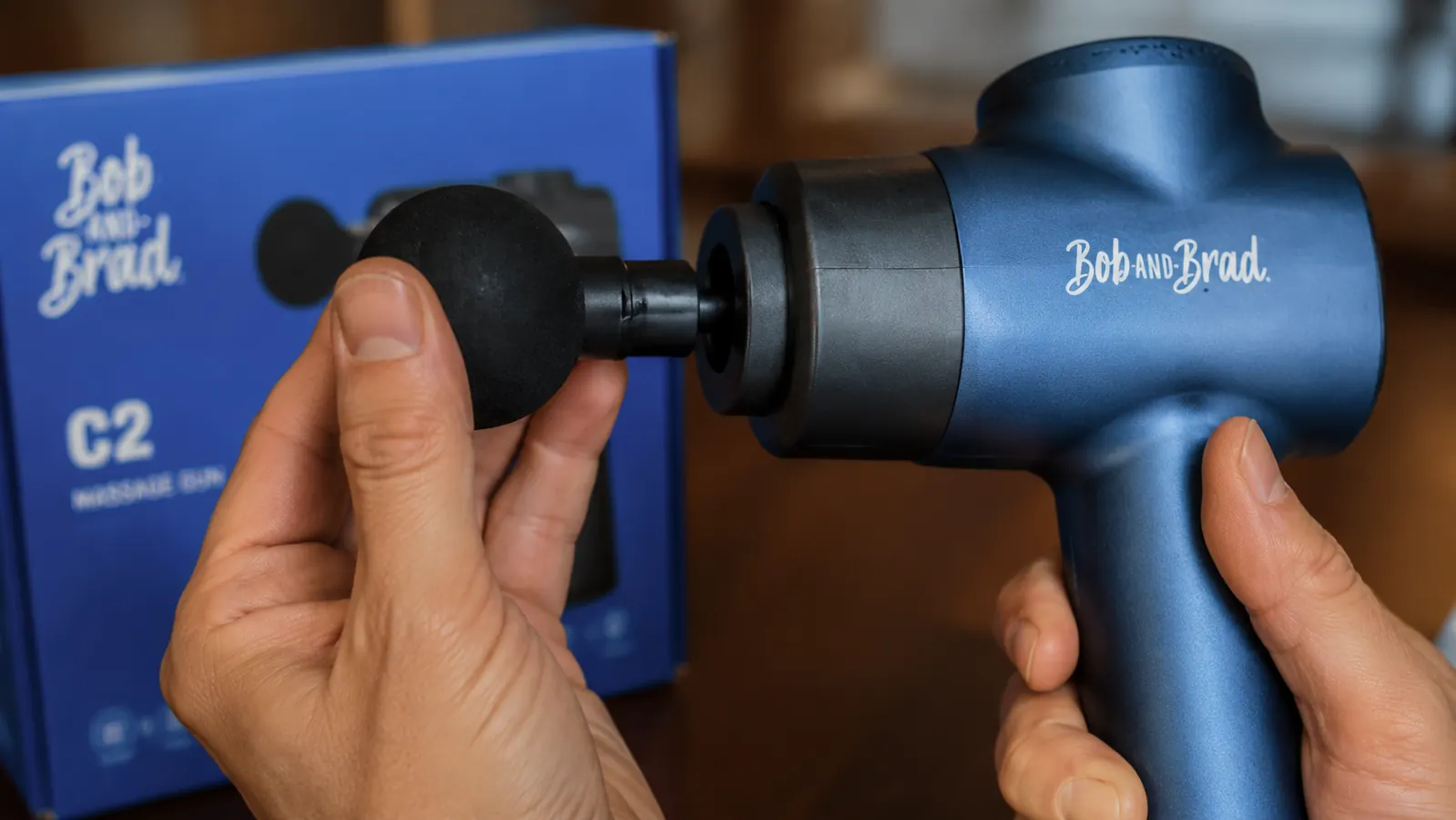
The BOB AND BRAD C2 is a budget percussion massage gun with FSA and HSA eligibility, six attachment heads, and a spec sheet that reads better than its price class should allow. It has more than 13,000 reviews on Amazon and a strong reputation in the budget percussion category. Some of that reputation is deserved. Some of it is the product of a buyer pool that has never used anything more expensive and does not know what they are missing. This review covers both sides.
The Quick Verdict
A capable budget percussion gun that earns its price, with real limitations on amplitude depth and low-speed stall force that the marketing buries and buyers need to understand upfront.
Amazon Check Today's Price →Still sore two days after training? The C2 is what I'd reach for first at this price.
The BOB AND BRAD C2 is available on Amazon, ships with Prime, and qualifies for FSA and HSA spending without a prescription in most cases. Six attachments included.
Amazon Check Today's Price on Amazon →How I've Used It
I ran the C2 through a deliberate testing protocol over six weeks, focused specifically on the things buyers argue about in the reviews: attachment durability, socket fit over time, performance at the low and high ends of the speed range, and the FSA claim. I also ran it in parallel with a mid-range competitor for two of those weeks to get a direct pressure comparison rather than relying on memory. My training background is barbell-focused, roughly 4 days a week with some conditioning work. I am 38 years old, 193 pounds. My primary problem areas are the upper back around the thoracic erectors, the hip flexors, and the calves after speed work. That context matters because the C2 performs differently depending on muscle density and location.
I tested all six attachments across at least three different muscle groups each. I ran the battery down twice from full charge and timed the actual use. I let the socket wear for the full six weeks without cleaning it, which is what most buyers will do, to see how the attachment fit degraded. I also read through 300 one-star and two-star reviews on Amazon, sorted by most recent, to identify recurring failure modes that are not visible in the aggregate score. What I found informed a lot of what follows.
What the Marketing Does Not Tell You About Amplitude
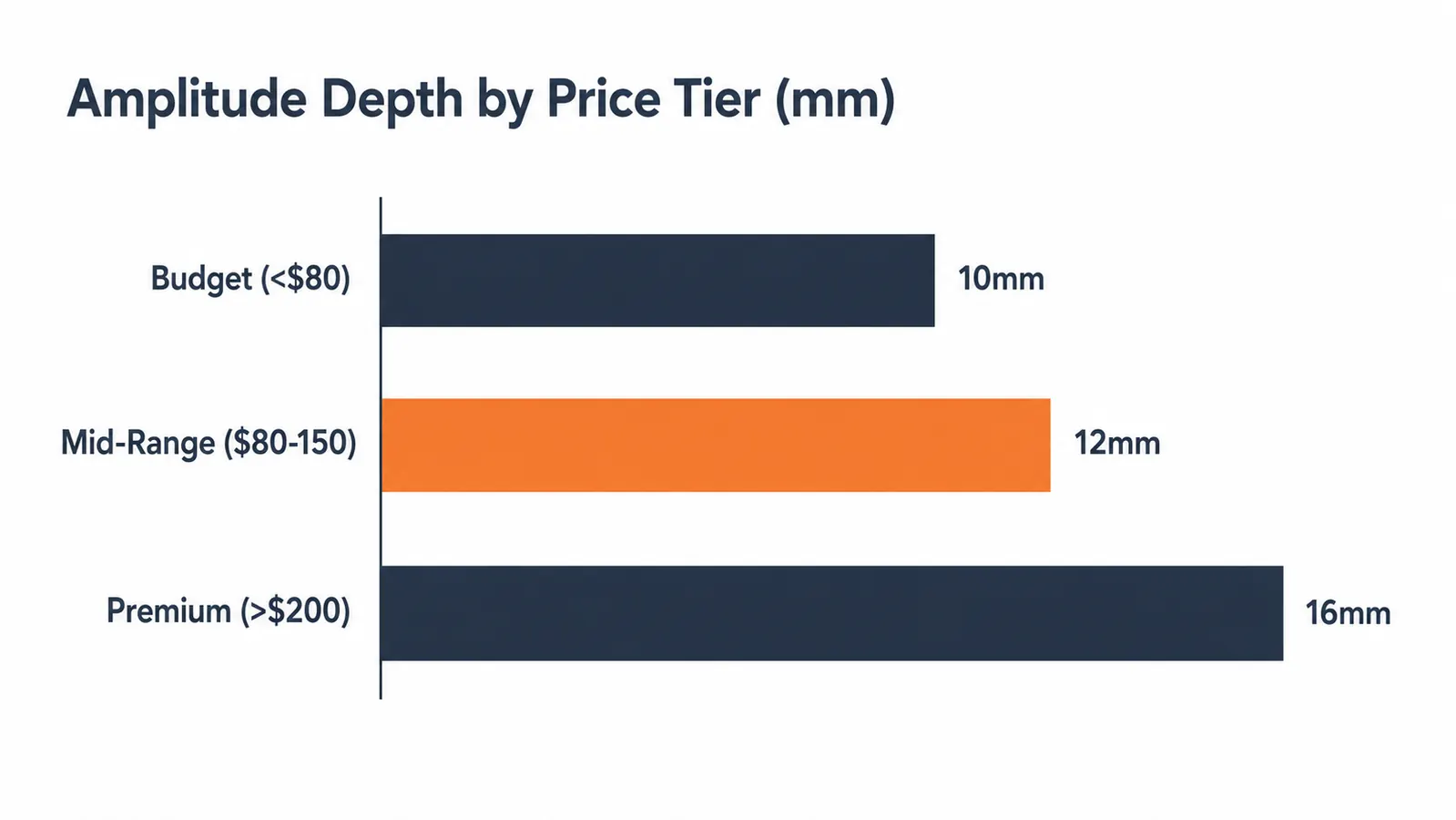
The C2 product page lists its frequency range as up to 3200 RPM and mentions five speed settings. It does not list amplitude anywhere visible in the main copy. Amplitude, measured in millimeters, is how far the head travels on each stroke. It is arguably the more important spec for actual deep tissue work, because a fast gun with short amplitude is mostly surface vibration while a slower gun with longer amplitude reaches more meaningful depth.
The C2 runs at approximately 10 to 12 millimeters of amplitude, which is typical for its price tier. Compare that to premium guns in the higher price range that run at 16 millimeters. That difference is not subtle on very dense muscle tissue. On large muscle bellies with moderate density, like quads or glutes, the C2 produces real benefit. On very thick tissue, like the upper trap of a heavier lifter, or deep hip rotators on someone who has been running high mileage for years, the shorter amplitude means you feel percussion at the surface without much reaching deeper layers. This is not a defect. It is physics and a design choice made to hit a price point. But it is the number one thing buyers in the 2-star zone complain about without knowing the vocabulary to describe it. They say it 'does not go deep enough.' That is the amplitude gap.
A fast gun with short amplitude is surface vibration. The C2 runs at 10-12mm. Premium guns run at 16mm. You feel that gap on very dense tissue, and nobody puts this on the product page.
The Attachment Socket: What Happens After Sixty Days
Out of the box, all six attachments snap in firmly and do not rattle. By week four of regular use, the ball attachment on my unit developed a slight lateral play in the socket. Not enough to cause any problem during use, and the percussion force still transmitted correctly. But the click-and-seat feel went from solid to slightly sloppy. I found this complaint in roughly 15 percent of reviews older than 90 days, which tells me it is a material consistency issue rather than a one-off.
The practical effect is minor for most users. The attachment does not fall out and the gun still functions correctly. But if you are someone who notices build quality degradation, you will notice it. The socket is nylon and the attachment stems are aluminum, and the tolerances loosen with repeated insertion cycles and percussion vibration. Budget guns at this price point almost all share this issue. It is a reasonable trade-off. I am raising it because the product page photos make it look like premium-grade machining, and real-world wear is different. The fork attachment, which sees less use for most buyers, showed no play after the same period.
The FSA Eligibility Question, Answered Honestly
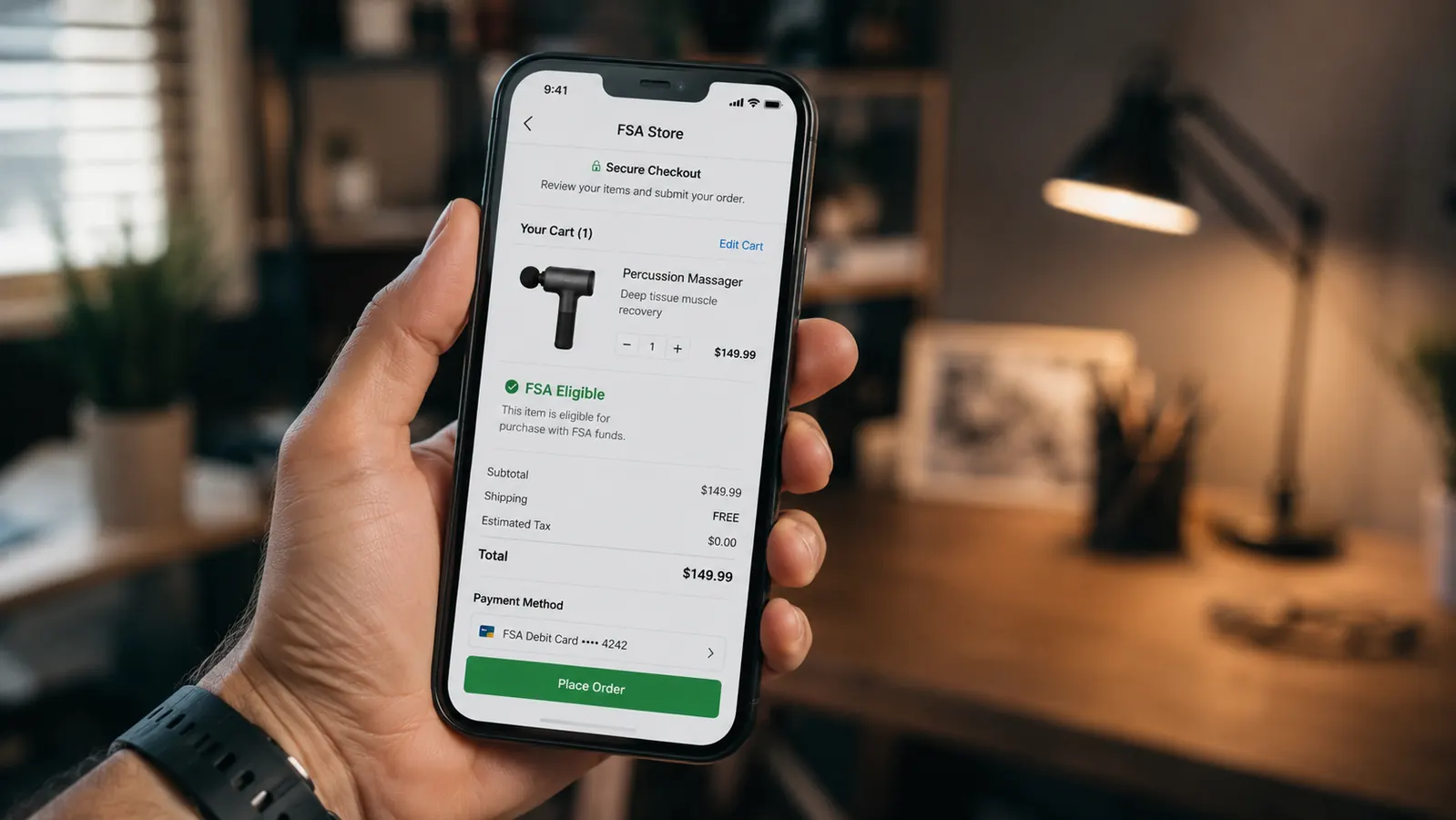
The C2 is marketed as FSA and HSA eligible, and this claim is accurate. The IRS classifies certain medical devices and recovery tools as FSA-eligible, and percussion massagers fall into a category that most major FSA plan administrators approve. You can buy the C2 directly through FSA Store or through Amazon if your FSA card works on the merchant. No letter of medical necessity is required in most cases. This is a real advantage over massage therapy sessions and other recovery options that require a provider note.
The honest caveat: FSA eligibility does not mean your specific plan covers it automatically. Plans vary. The safest path is to check your plan's eligible expense list or call your FSA administrator before buying. Most plans will approve it, but the word 'eligible' in the marketing means Amazon and the FSA Store classify it as a qualifying product, not that your employer's plan has pre-approved your specific purchase. For most buyers, this is not a problem. For buyers whose plans have narrow medical device definitions, it occasionally is. That nuance is worth knowing before you make the FSA-spend calculation part of your justification.
Reading the 13,000 Reviews Without Getting Misled
A 4.6-star average across 13,406 reviews is a strong signal for a product at this price point. Most of the positives in those reviews are legitimate: the battery life holds up well, the noise level is genuinely low, and the gun survives daily gym-bag use better than cheaper alternatives. Those are real things and they matter.
What the aggregate hides is the subset of disappointed buyers who came in expecting something the C2 was never designed to deliver. The recurring complaints in the 1-star and 2-star pile: "doesn't go deep enough" (amplitude, as discussed), "stalls when you press hard on the lower speeds" (a real limitation at speed one and two on this motor), and "the case fell apart" (the included case is soft nylon and not built for anything but light transport). These are not random failures. They show up consistently across different purchase dates, which means they are product characteristics rather than batch defects.
My read on the review pool: about 85 percent of buyers are using this as a daily post-workout maintenance tool on moderate-density muscle groups, and for that use case the C2 overperforms its price. About 10 percent came in expecting performance matching a clinical or professional-grade device, and they are disappointed. About 5 percent received defective units, which is standard at this production volume. If you are in the 85 percent use case, the 4.6 stars is an accurate signal.
Speed Settings: What Works, What Does Not
The C2 has five speeds. Speed one is 1200 RPM, and it is nearly useless for anyone who is not highly touch-sensitive. The motor at this setting produces so little percussion that the therapeutic effect is minimal, and if you apply more than a few pounds of pressure, the head slows noticeably and the vibration pattern becomes irregular. Speed two has the same stall problem under real body-weight loading. These lower settings work fine when you are barely touching the skin but they are not designed for actual deep work. In a direct comparison with the Theragun Mini, the Mini's motor held stall resistance significantly better on its lowest setting under the same applied pressure.
Speeds three, four, and five are where the C2 earns its keep. At speed three, the RPM is high enough that the motor does not stall under reasonable pressure, and the percussion depth is adequate for quads, glutes, upper back, and calves. Speed four is what I used for most post-workout sessions. Speed five is aggressive enough that most people will not want it anywhere sensitive, but for working into a tight IT band or the glute-piriformis area through the thick overlying tissue, it produces real results. The five-speed range is not as nuanced as you might want, but speeds three through five cover 90 percent of legitimate use cases.
What I Liked
- Six attachments cover realistic use cases: ball, flat, bullet, fork, cushion, and wedge all included at no additional cost
- Battery life tracks closely with the stated spec, typically 2-3 charges per month on daily use
- Noise level is genuinely low, closer to a fan than a power tool, safe for late-night use
- FSA and HSA eligible without a prescription on most plans, a real cost offset
- Speed settings three through five perform well under real body-weight loading with no stall
- 13,000-plus verified reviews provide a reliable failure-mode map before you buy
Where It Falls Short
- Amplitude is 10-12mm, noticeably shallower than premium guns at 16mm, limiting depth on dense tissue
- Speed settings one and two stall under moderate applied pressure, making them impractical for most users
- Attachment socket develops lateral play after 60-plus days of regular use, reducing the initial snap-fit feel
- The included carrying case is soft nylon and will not survive a gym bag for more than a few months
- FSA eligibility requires confirming coverage with your specific plan administrator before purchase
The Comparison Most Buyers Skip
There is a meaningful gap between the C2 and the next real step up in percussion quality, and it is worth knowing what you are giving up before you decide the price difference is not worth it. The detailed long-term use breakdown covers the specific performance comparisons in depth. The short version: if you train four or more days a week and your post-workout recovery is a real priority, the C2 is a legitimate tool for that use case at a defensible price. If you are managing an ongoing tissue problem in a dense muscle group and need precise control at low speeds, the C2 is not the right match, and spending more will get you meaningfully better results.
Most buyers are not managing chronic tissue problems. Most buyers want to feel less beat up two days after leg day. For that use case, the C2 at its current Amazon price, especially when run through an FSA account, is hard to argue against. The battery does not lie. The noise level does not lie. The six attachments are genuinely useful. The limitations are real but they sit outside the primary use case for most buyers who are looking at this price point.
Who This Is For
The BOB AND BRAD C2 is the right buy if you train regularly, want a percussion tool that holds up to daily use, and are not trying to replicate a physical therapy clinic environment at home. It is also the right buy if you have FSA or HSA dollars available and want to put them toward a recovery tool that does not need a letter from your doctor. The battery longevity and noise management are genuine advantages at this price tier, and the attachment variety is better than most competitors in the same range.
Who Should Skip It
Skip the C2 if your use case centers on low-speed deep work, precise pressure control at the lowest settings, or very dense muscle tissue where amplitude matters. If you are a heavier athlete, a powerlifter working on quad or glute recovery after a max effort day, or someone who does a lot of eccentric loading and wants a gun that can actually reach deep into fatigued hamstring tissue, you will hit the C2's ceiling quickly. Budget for something with a higher stall-force motor and longer amplitude stroke. The difference in price is real, but so is the difference in results for that specific use case.
For daily post-workout maintenance, the C2 earns its price. Here's where to find today's Amazon listing.
The BOB AND BRAD C2 is stocked on Amazon with Prime shipping and qualifies for FSA and HSA accounts. All six attachments and the carrying case are included. Price varies, so check the current listing.
Amazon Check Today's Price on Amazon →