
Most people who try tart cherry extract quit after two weeks because they took it wrong. They grabbed one capsule after a workout, felt nothing, and wrote it off as another supplement that didn't deliver. The compound in tart cherries that reduces exercise-induced soreness takes time to build up, it needs consistent dosing, and the timing actually matters. Get those three things right and you have a genuinely useful recovery tool. Get them wrong and you're just swallowing capsules for no reason. This guide covers exactly how to use tart cherry extract for workout recovery so you can do the former.
I've been using Zazzee Tart Cherry 10:1 Extract for about four months across a training block that included two heavy leg-volume cycles and a 10-day construction project that beat up my body on top of the gym work. I settled into a protocol based on what the available research points to and adjusted based on what I noticed. What follows is that protocol, step by step.
Your muscles are already telling you recovery is the bottleneck. Here's the extract that makes the difference.
Zazzee Tart Cherry 10:1 Extract ships 200 vegan capsules per bottle, rated 4.6 stars across 8,300+ reviews. One bottle lasts most trainees more than six months at the standard two-capsule-per-day dose.
Amazon Check Today's Price on Amazon →Step 1: Understand What You're Actually Taking (and What It's Not)
Tart cherry extract is a concentrated form of Montmorency cherry, which is higher in anthocyanins and other polyphenols than the sweet cherries you eat. A 10:1 extract means ten pounds of cherries went into making one pound of extract powder. That concentration is why a capsule can deliver meaningful amounts of the active compounds without you having to drink eight ounces of tart cherry juice twice a day.
What those compounds do: they work through antioxidant and anti-inflammatory pathways that appear to reduce exercise-induced muscle damage markers and shorten the window of peak soreness after hard training. Some research also points to a melatonin-supporting effect that improves sleep quality, which is probably the most underrated recovery benefit. Always check the label on any supplement and confirm the serving size with your physician before adding anything new to your routine. General guidance here is based on research and personal use, not medical advice.
What it is not: a painkiller, a stimulant, or a shortcut that replaces sleep, protein, and actual rest days. If your recovery is wrecked because you're sleeping five hours and eating 100 grams of protein on a 200-pound frame, tart cherry extract won't fix that. It's a support tool, not a foundation.
Step 2: Pick the Right Form and Concentration
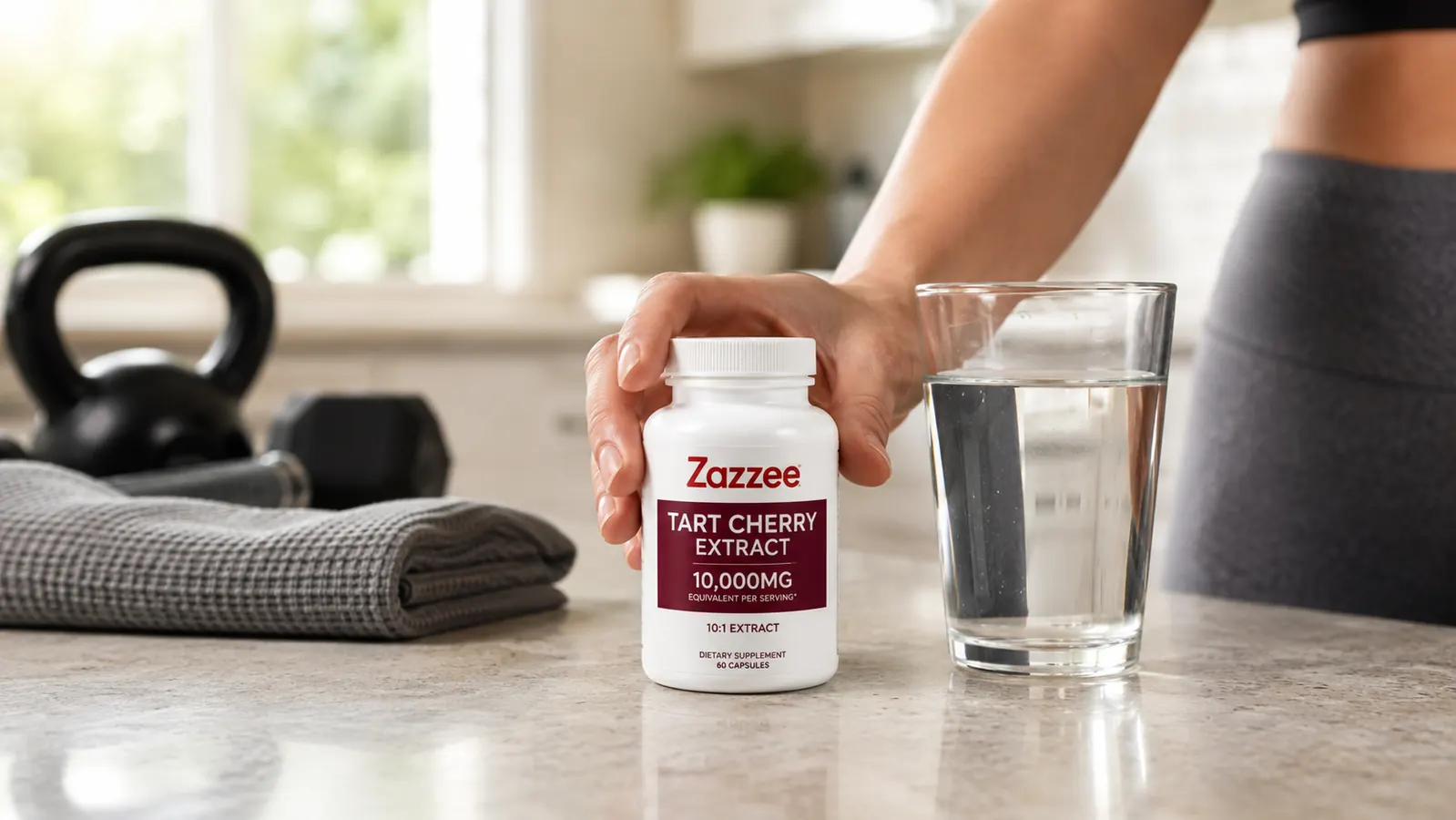
You have three options: juice, powder, or capsule. Juice gives you a fast-absorbing liquid but comes with a significant amount of sugar and limited concentration control. Powder mixes into shakes but is harder to find at meaningful concentrations and often tastes aggressively sour. Capsules are the practical choice for most active people because the dose is fixed, there's no flavor to deal with, and you can throw them in a gym bag.
For capsules, the concentration that comes up most in the research literature is equivalent to roughly 480 milligrams of Montmorency cherry extract per serving. A 10:1 extract at two capsules gives you approximately that range, which is why products using that ratio and dose have become the standard for recovery use. If a product doesn't specify the concentration ratio on the label, pass on it. You can't evaluate value or expected effect without knowing what you're actually getting per capsule.
I use Zazzee's 10:1 extract specifically because the ratio is printed clearly on the label, the capsules are vegan so they dissolve predictably, and the 200-count bottle keeps the per-dose cost low enough that I don't start skipping days when things get busy. More details on how I evaluated it are in my 3-month field test review.
Step 3: Time Your Doses Around Your Training Sessions
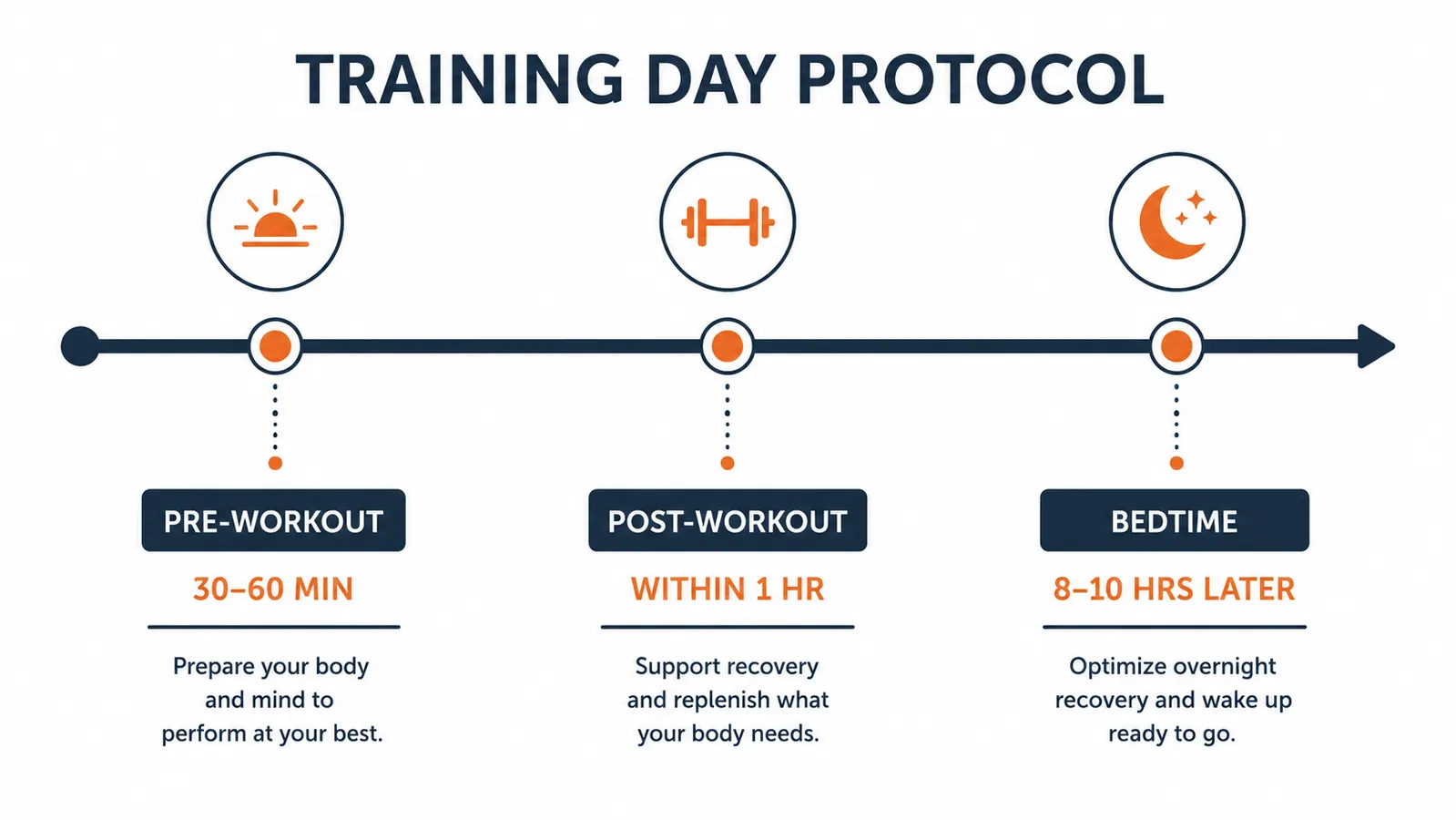
Timing is where most people get this wrong. Tart cherry extract is not a post-workout-only supplement. The research protocol that showed meaningful DOMS reduction used a twice-daily approach that bracketed training sessions, not a single large dose dumped in after the fact. Here is the framework I use:
On training days: take one serving 30 to 60 minutes before your session and a second serving within an hour after. The pre-workout dose supports your antioxidant capacity going into the session. The post-workout dose starts the anti-inflammatory work while your muscles are in their peak inflammatory phase. Together they give you meaningful coverage across the window when exercise-induced muscle damage is most active.
On rest days: take your two servings spaced roughly 8 to 12 hours apart. Morning and evening works fine. You're not bracketing a workout anymore, but you are keeping the compound present while your tissue is in the longer repair phase. Skipping rest-day doses because you didn't train is a common mistake that resets any buildup you've accumulated.
If you train late and one of your doses would fall right at bedtime anyway, that's actually a bonus. The melatonin-adjacent compounds in tart cherry appear most useful when taken in the evening, so a post-workout or rest-day evening dose doubles as sleep support. I deliberately shifted my second dose to about 90 minutes before bed during my heaviest training weeks and noticed I fell asleep more reliably even when I was still physically wound up from a late session.
The pre-workout dose supports your antioxidant capacity going in. The post-workout dose starts the anti-inflammatory work while your muscles are in their peak damage phase. Together they bracket the window that matters.

Step 4: Run It Consistently for at Least 10 Days Before Evaluating
This is the step that separates the people who get results from the people who decide it doesn't work. Polyphenol compounds do not produce an overnight effect. The research that showed measurable soreness reduction ran participants for seven to ten days of consecutive dosing before the training stimulus was applied. If you take two capsules after one brutal leg day and expect to feel normal the next morning, you will be disappointed and conclude the product doesn't work.
My practical minimum before any judgment: two full weeks of consistent twice-daily dosing with at least three hard training sessions in that window. By the end of week two I had a clear sense of whether I was experiencing the thing people report, which for me showed up most clearly as soreness that peaked earlier and backed off faster, rather than soreness that disappeared entirely. I still got sore after high-volume squat days. I just didn't stay sore into day three the way I used to.
Track it simply. Rate your soreness on a 1 to 5 scale at 24 and 48 hours after your hardest sessions during weeks before you start the extract, then again during weeks two and three of the protocol. Most people see a pattern difference in that comparison even if the day-to-day experience doesn't feel dramatic.
Step 5: Stack It Intelligently and Know When to Cycle Off
Tart cherry extract is generally considered safe for long-term use, but there are a few practical considerations. First, it pairs well with magnesium glycinate at bedtime if sleep quality is a primary goal. Both support recovery through different pathways and there are no known interactions between them. It does not interact well as a combination with NSAIDs like ibuprofen on a daily basis, because you are then doubling up on anti-inflammatory compounds in a way that may blunt the training adaptation signal your body needs to get stronger. Reserve the ibuprofen for genuine injury situations.
Second, if you are running a serious hypertrophy or strength block where the soreness and inflammation are part of the adaptation signal, some coaches prefer to minimize anti-inflammatory supplementation and rely on it only during deload weeks or when cumulative fatigue is running high. That is a reasonable approach. I use tart cherry extract year-round because my work in construction adds a physical load on top of my gym training that I cannot control, and managing that cumulative soreness has obvious quality-of-life value. Your situation may be different.
Third, check the label for the recommended serving size on whatever product you buy. The Zazzee label specifies two capsules as a serving. Start there. Do not assume more is better. Confirm with your physician if you have any existing health conditions, take prescription medications, or are pregnant. This is general guidance based on the research and my own experience, not a medical recommendation.
What Else Helps
Tart cherry extract is one tool. The protocol that actually produces consistent recovery week over week includes adequate protein within two hours of training, 7 to 9 hours of sleep, at least one full rest day per week, and some form of soft tissue work. I use a percussion massager on my quads and hamstrings the evening after heavy lower-body days, and the combination of the massager plus tart cherry extract before bed has been the most noticeable two-variable improvement to my week-over-week readiness in the past year. Neither one alone delivered what both together did.
If you're interested in why the research backs tart cherry more than most recovery supplements, the detail is in the 10-reasons breakdown. It gets into the specific anthocyanin mechanisms, the sleep-quality studies, and which populations saw the strongest effects.
If you've been sleeping poorly after hard training weeks, this is the one supplement I'd add first.
Zazzee Tart Cherry 10:1 Extract delivers 200 vegan capsules per bottle at a cost per serving that makes daily use realistic. Rated 4.6 stars with over 8,300 reviews. The 200-count size runs most people six months or more.
Amazon Check Today's Price on Amazon →