
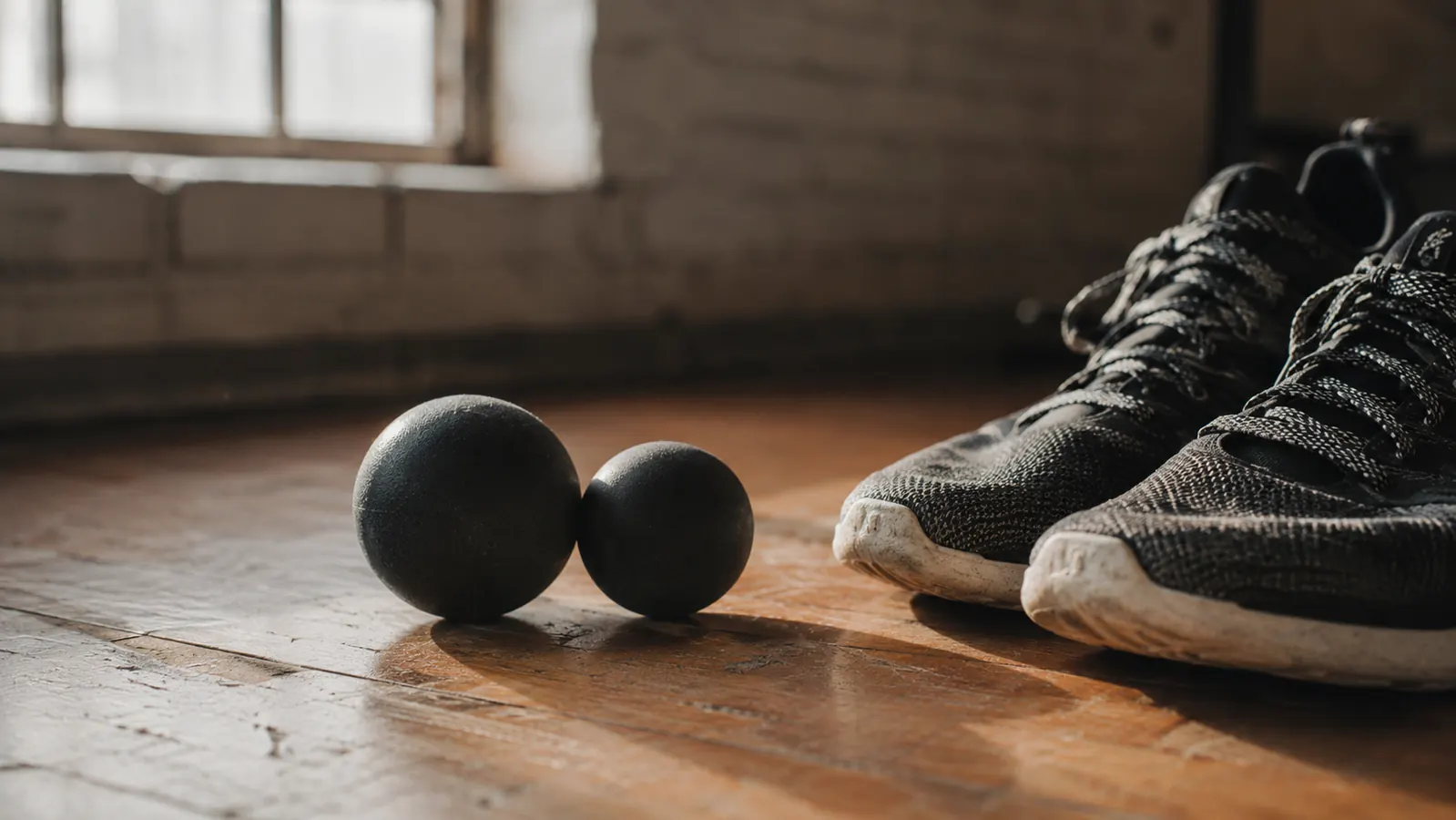
I want to tell you something nobody in a product review ever says: this is a rubber ball. A very good rubber ball. But a rubber ball. If you go in expecting a miracle, you will get frustrated. If you go in understanding what a ball-shaped tool does that nothing else can do, you will use the Acupoint massage therapy ball set every single day, the way I do. I train five days a week, a mix of deadlifts, barbell squats, and short runs, and the Acupoint set has become the first thing I reach for when I have a stubborn spot that a foam roller just slides over. That is a specific claim and I want to back it up.
This is not the same take as the long-term-use review linked below. That review covers what daily use looks like across months. This piece is about what the product actually does that the marketing does not fully explain, which areas it genuinely outperforms other tools on, and what it cannot do no matter how you use it. If you have already read the long-term review, this goes deeper on technique, the two-ball size difference, and the honest limits.
The Quick Verdict
Best inexpensive tool for reaching spots a foam roller cannot. The two-size setup earns its price immediately. Not a replacement for a massage gun on large muscle groups.
Amazon Check Today's Price →If a lacrosse ball frustrates you, this is the upgrade that actually fits the job.
The Acupoint set gives you two sizes so you stop forcing one ball into every situation. Most people who own only a lacrosse ball switch and never go back.
Amazon Check Today's Price on Amazon →The Two Sizes: What Nobody Actually Explains
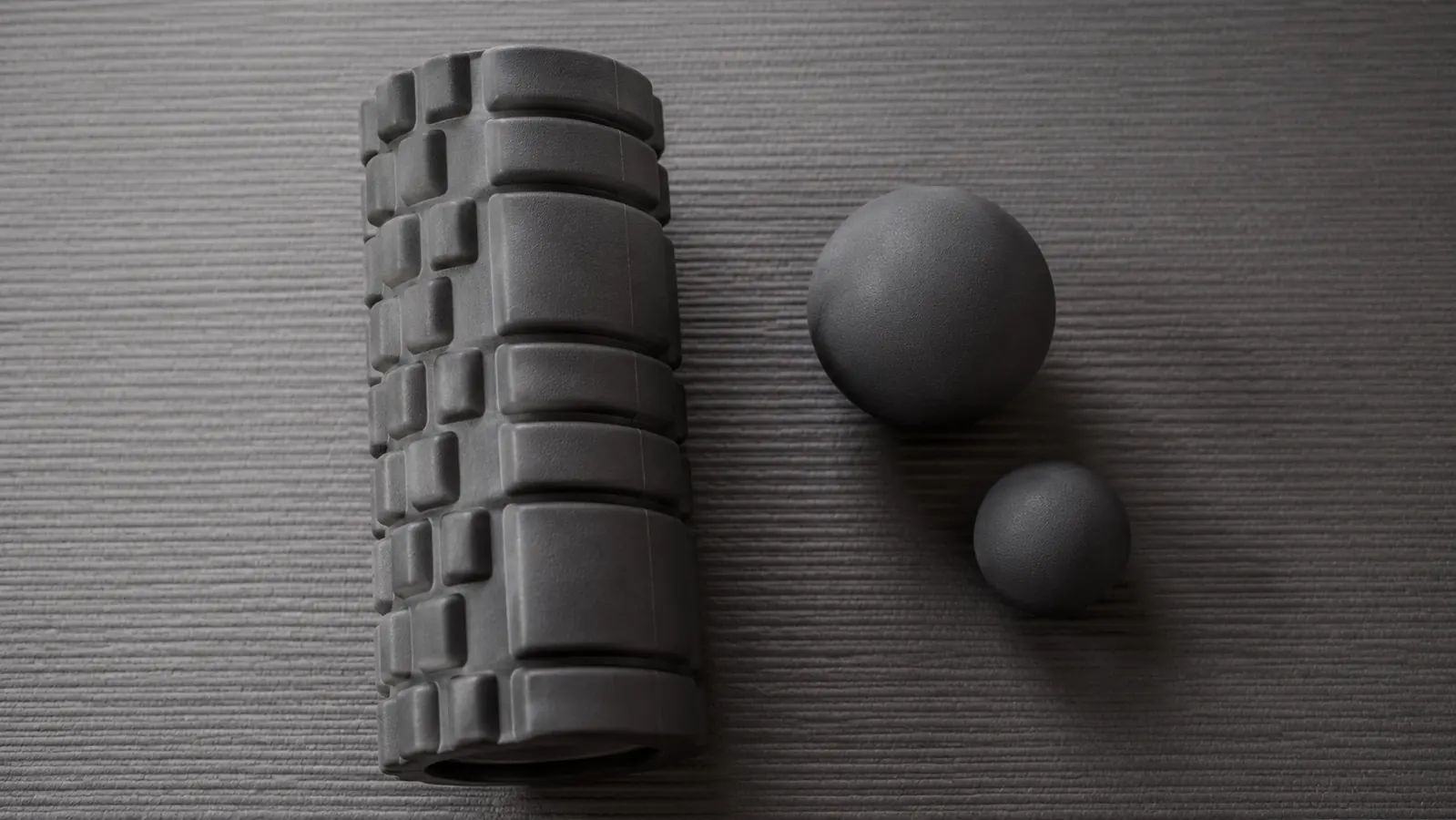
The Acupoint set ships with two balls. The larger one is roughly the diameter of a baseball. The smaller one is close to a golf ball. Both are smooth, dense rubber with just enough give that they do not feel like you are pressing a billiard ball into your body. Most reviews mention the two sizes and move on. That is a mistake, because the size difference is the entire point.
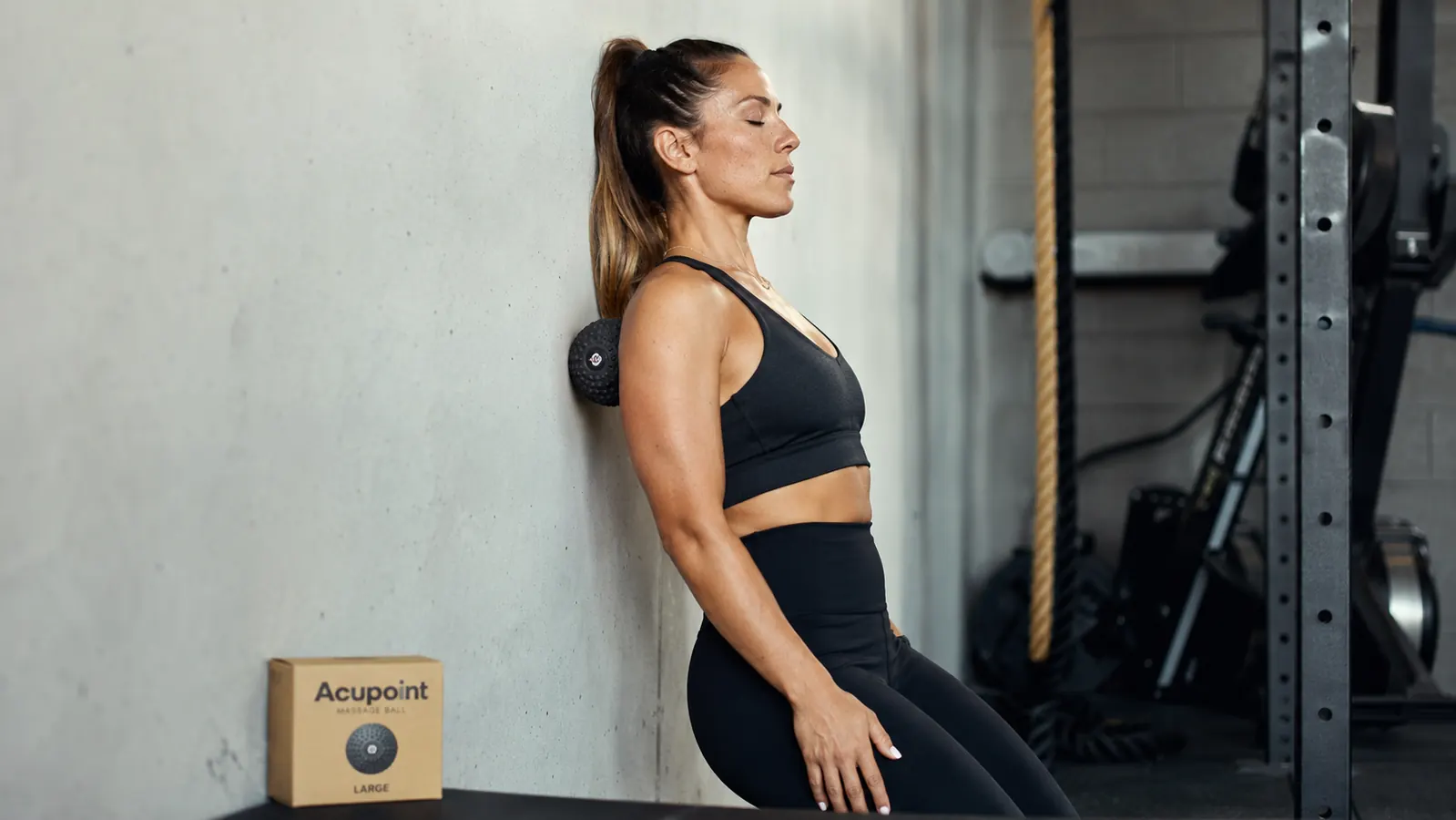
The large ball is for anything where a wide base of contact helps: thoracic spine against a wall, glutes on the floor, upper hamstrings. It distributes pressure over a wider patch, so you can add serious body weight without it becoming painful too fast. I use the large ball for about 70 percent of my sessions. If you are dealing with a tight upper back after a heavy bench day, you want the large ball against the wall, positioning it between your shoulder blades, letting gravity do the loading.
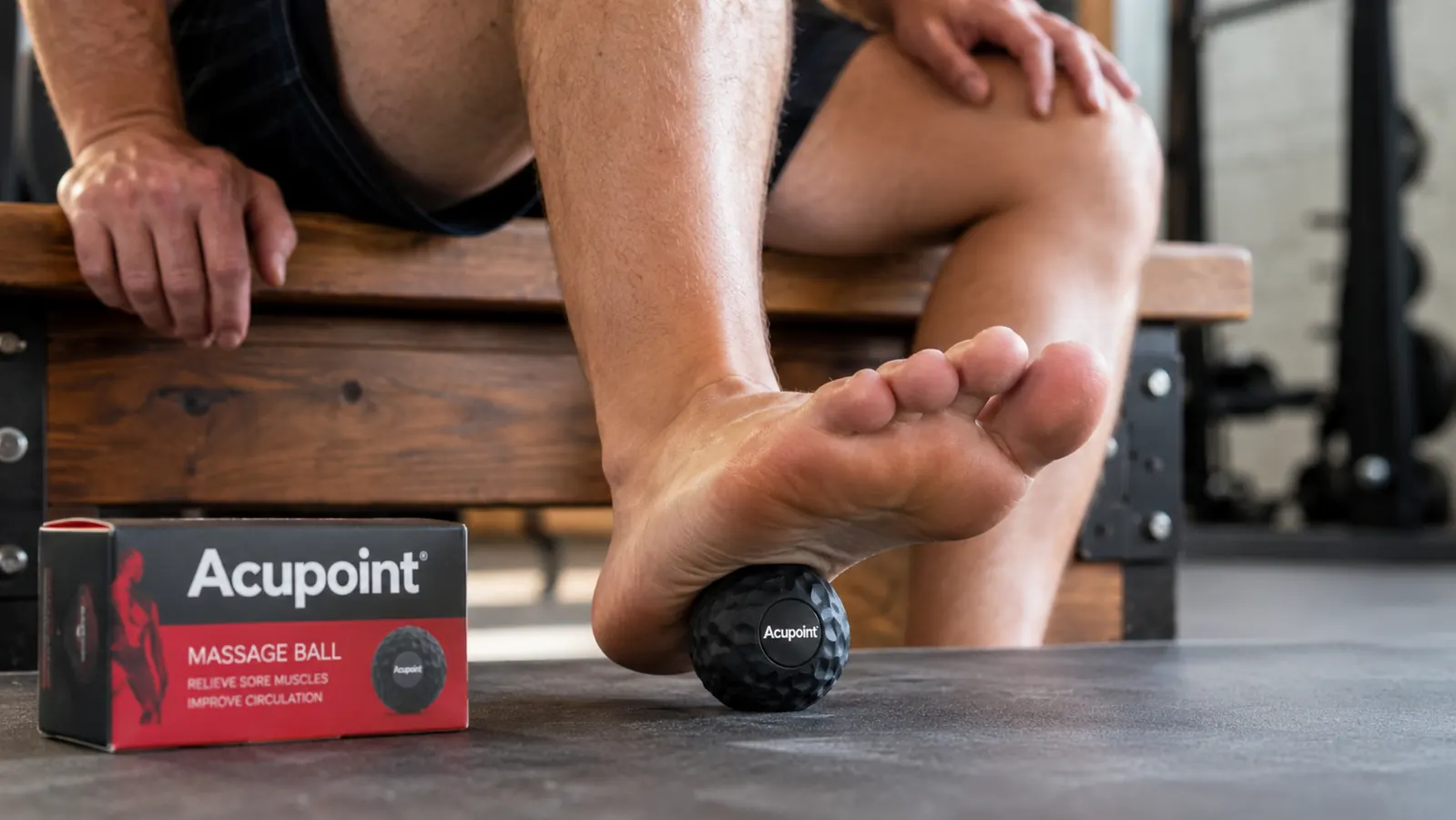
The small ball is for anywhere the larger one does not fit: the arch of the foot, the piriformis (that deep hip rotator muscle that sits under the glute), the suboccipitals at the base of the skull, and the pectoralis minor near the collarbone. You simply cannot get a baseball-sized ball into those areas with controlled pressure. The small ball drops into the right spot and holds. This is exactly why a single lacrosse ball, which sits right between the two Acupoint sizes, ends up being a compromise in both directions.
A lacrosse ball is a compromise. Too small for the thoracic spine, too large for the piriformis. The two-size setup solves that problem for under fifteen dollars.
Where It Genuinely Beats a Foam Roller
A foam roller is a compression tool, not a trigger point tool. When you roll out your IT band or your quads, you are applying broad pressure across a muscle belly. That is useful and I still use a foam roller regularly. But when you have a specific, identifiable knot, a point that is tender to direct pressure and refers discomfort somewhere else when you press it, a foam roller rolls right past it. The ball stays on it.
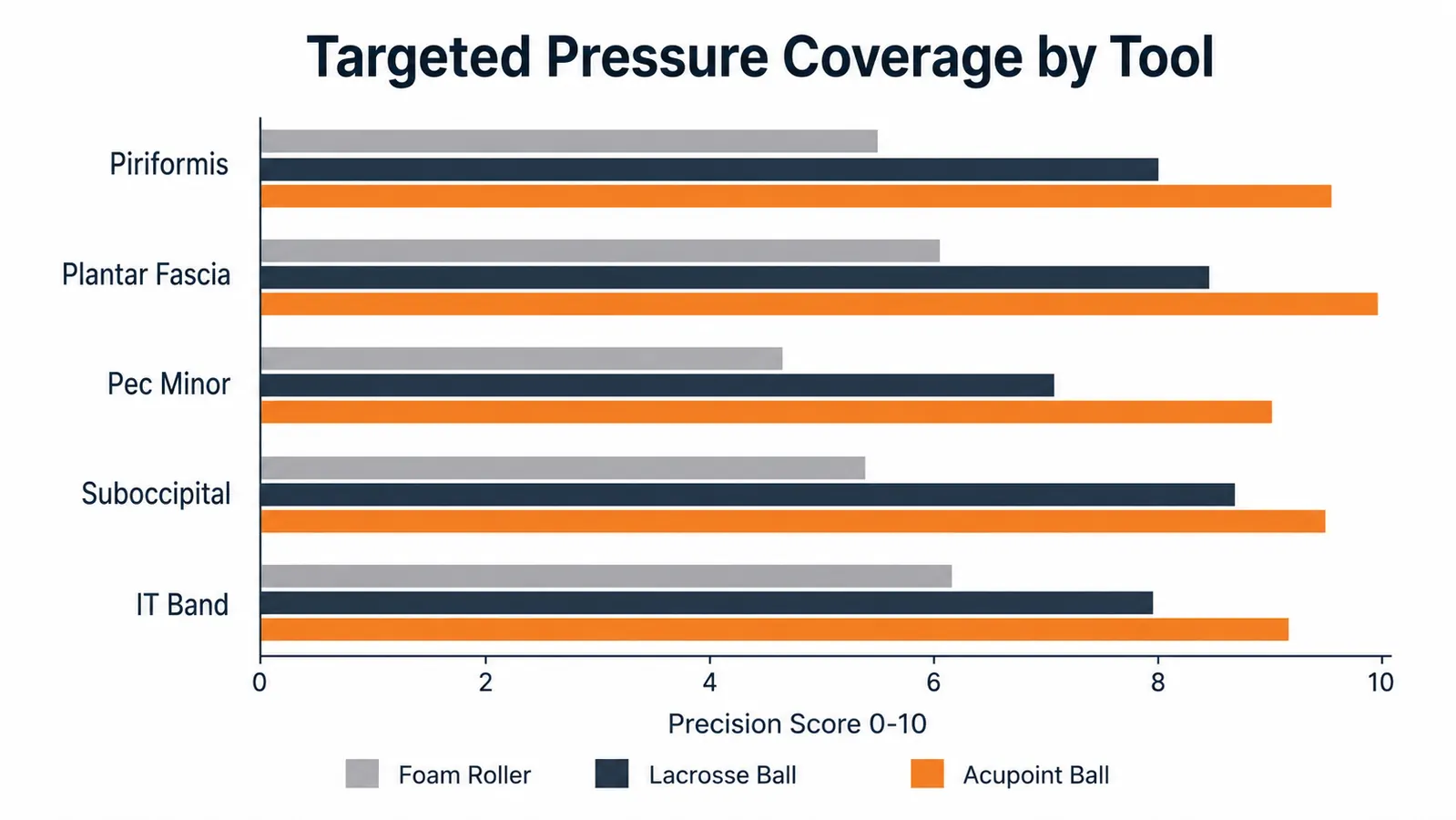
The five areas where I have consistently gotten better results from the Acupoint ball than from any other tool I own are: the plantar fascia under the foot, the piriformis, the pectoralis minor (that knot just under the front of the shoulder near the ribs), the suboccipitals at the base of the skull, and the upper trapezius at the top of the shoulder blade. Every one of those is a small, deep structure that a foam roller cannot isolate. Every one of them responds well to sustained, localized pressure from a ball the right size for that area.
For a full step-by-step protocol covering each of those body parts, I have that written up separately. The short version here: the ball is not something you roll back and forth quickly. You find the spot, sink in with controlled body weight until you feel it, and hold for 30 to 90 seconds while breathing. That is it. The technique is simple. The patience is the hard part.
The Honest Limits: What It Cannot Do
The Acupoint ball cannot cover large muscle bellies efficiently. If your quads are wrecked after a hard squat session, rolling a ball under your quad is slow work. You will need 10 minutes to cover what a foam roller handles in two. That is not a flaw, it is just the physics of contact surface area. For large-muscle post-workout recovery, the foam roller wins on time. For localized trigger point release on the spots listed above, the ball wins on precision.
It also cannot replicate percussion. A percussive massage gun drives a rapid oscillating force into tissue, which does something different from sustained compression. If your problem is flushing lactic acid or warming up a muscle group before a lift, a massage gun is the better tool. The ball is a precision instrument for a specific job. If you go in treating it like a full recovery system, you will be disappointed. Treat it as one piece of a complete approach and it pulls its weight every single time.
The rubber material also picks up dust and hair. It is not a deal-breaker but it is real. Rinse them with warm water every week or so and the texture stays clean. They do not degrade noticeably even after months of regular use. The material held up better than I expected for the price point.
Firmness: Is It Too Hard or Not Hard Enough?
This is the question I get asked most when people see me using these. The Acupoint balls are firm but not rigid. They have a slight compression, maybe 5 to 10 percent, when you press hard. A true lacrosse ball has zero give. A tennis ball has too much. The Acupoint firmness sits in a range that most people can tolerate on a cold, sensitive spot without it becoming a pain event. When I first used the small ball on my plantar fascia, which was genuinely inflamed at the time, I could use it standing at full body weight within two weeks. A lacrosse ball on the same spot at the same bodyweight would have been too aggressive to sustain.
For people with high pain tolerance who want maximum intensity, the Acupoint balls may feel soft. For most people training at a recreational to intermediate level, the firmness is exactly right. It is firm enough to create real tissue compression without feeling like you are attacking yourself.
The Three Mistakes People Make With a Massage Ball
First mistake: rolling too fast. This is not a rolling tool, it is a compression tool. When you rapidly roll back and forth, you just stimulate the surface and create some friction heat. Useful for warming up an area, not useful for releasing a trigger point. Slow down. Find the spot. Stay on it.
Second mistake: using the wrong size for the area. The large ball on the piriformis does not fit right. The small ball on the thoracic spine does not load evenly. Match the ball size to the body part. This is why the two-ball set matters. If the Acupoint set only came with one ball, like a lot of single-ball sets do, it would be a worse product.
Third mistake: using too much pressure too early in a session. Pressing a cold, tense muscle hard with a ball tends to cause the muscle to guard and tighten further. Start with 60 percent of your available body weight on the ball, hold for 30 seconds, then gradually increase pressure as the tissue relaxes. You will get deeper and more effective release with less discomfort by building up than by going hard from the start.
What I Liked
- Two sizes cover spots a single ball cannot handle well
- Firmness is appropriate for most people, including those new to trigger point work
- Small enough to carry in any gym bag, pack in luggage, or keep at a desk
- Durable rubber holds up to daily use without deforming
- Price makes it a zero-risk purchase to test whether ball therapy works for you
- Effective on five key hard-to-reach areas where foam rollers are useless
Where It Falls Short
- Slow for large muscle groups, foam roller is faster there
- No texture or nodules if you prefer a knobby surface
- Surface picks up lint and dust, needs a quick rinse weekly
- Cannot replicate percussion or vibration-based recovery
- Large ball is not large enough for some users with very wide backs to cover the full thoracic spine
How It Compares to What You Might Already Own
If you own a foam roller, the Acupoint set is additive, not a replacement. They solve different problems. If you own a massage gun, same answer. The ball handles the spots the gun cannot get into at the right angle. If you own a lacrosse ball or a tennis ball, the Acupoint set is a legitimate upgrade because of the two-size advantage. For a full side-by-side look at how the Acupoint ball stacks up against the Theracane, which is another trigger point tool that takes a totally different approach, I have that breakdown in a dedicated comparison here.
The Theracane gives you reach, which is useful if you want to work your own upper back or rhomboids without needing a wall. The balls require gravity and a floor or wall for loading. If you train alone and have no way to use a wall, the Theracane is worth considering. If you have any wall in your life, the balls are faster to set up and more portable.
Who This Is For
The Acupoint massage ball set is the right tool if you have a specific, recurring tight spot that stretching has not fixed. Plantar fascia pain, hip tightness that foam rolling reaches the glute surface but not the piriformis underneath, a knot near the shoulder blade that no roller contour gets to, or a stiff base of the skull that builds up after long desk sessions. For any of those situations, this is the lowest-cost, highest-precision tool available. The price is genuinely low enough that I would not overthink the purchase.
It is also a solid starting point if you are new to trigger point work and unsure whether the approach will help you. Spend a week using the small ball under your foot for five minutes each morning if you have any plantar tightness. If it helps, you will become a convert. If it does not change anything, you are out less than the cost of a lunch. The risk-to-reward ratio here is about as low as it gets in recovery equipment.
Who Should Skip It
Skip it if what you need is broad post-workout muscle recovery across large groups. After heavy squats, the tool you want is a foam roller for the quads and hamstrings, or a percussion massager if you have one. The Acupoint ball is not the right choice for general workout soreness across a full leg. It is also not the right choice if you want a textured or nodule surface for a different sensation. The Acupoint balls are smooth. If you specifically want raised nodes or spikes for surface stimulation, look at a different design.
Most trigger point knots do not need an expensive tool. They need the right size ball in exactly the right spot.
The Acupoint set gives you both sizes for under fifteen dollars. It is the most-used piece of recovery gear in my bag, and the one I have recommended to more people than anything else at this price.
Amazon Check Today's Price on Amazon →